Direct Answer: Refrigerator Disposal in Spokane County
Disposing of a refrigerator in Spokane County requires certified Freon recovery under EPA Section 608 before transfer station processing. Self-haulers pay a mandatory $25.00 to $40.00 environmental surcharge on top of standard municipal scale fees ($19.70 minimum). Professional haulers evacuate gases, provide two-man lifting, and transport units upright directly to certified scrap recyclers.
What Are Spokane County's Refrigerant Disposal Regulations?
Federal clean air statutes and Spokane County environmental codes mandate the mechanical evacuation of all fluorinated refrigerants before cooling appliances enter municipal waste streams. Refrigerators, freezers, and heat-pump units utilize pressurized chemical coolants—specifically Chlorofluorocarbons (CFC-12), Hydrochlorofluorocarbons (HCFC-22), Hydrofluorocarbons (HFC-134a), and flammable Isobutane (R-600a)—that damage stratospheric ozone or generate high global warming potentials if released into open atmosphere.
Section 608 of the United States Clean Air Act (codified in 40 CFR Part 82) prohibits the intentional venting or atmospheric release of regulated refrigerants during maintenance, servicing, repair, or end-of-life disposal. The United States Environmental Protection Agency (EPA) enforces statutory civil penalties exceeding $37,500 per day per violation for illicit atmospheric discharge or uncertified compressor line severing.
Statutory Warning: Illegal Refrigerant Venting Penalties
Severing cooling lines, puncturing evaporator coils, or discarding cooling appliances with unevacuated refrigerant lines violates 40 CFR Part 82 (EPA Section 608) and Spokane County Code Title 8. Municipal scale operators inspect every cooling appliance. Units showing snapped copper lines face immediate gate rejection and environmental non-compliance citations.
Municipal disposal facilities across the Inland Northwest, including the City of Spokane Solid Waste Management Division and Spokane County Utilities, inspect every arriving refrigeration unit. Staff members verify whether cooling lines remain hermetically sealed or display verified documentation of prior recovery by a technician certified under universal EPA reclamation standards. If cooling lines have been snapped, crimped, or breached by uncertified personnel, transfer stations will reject the appliance at the inbound scale.
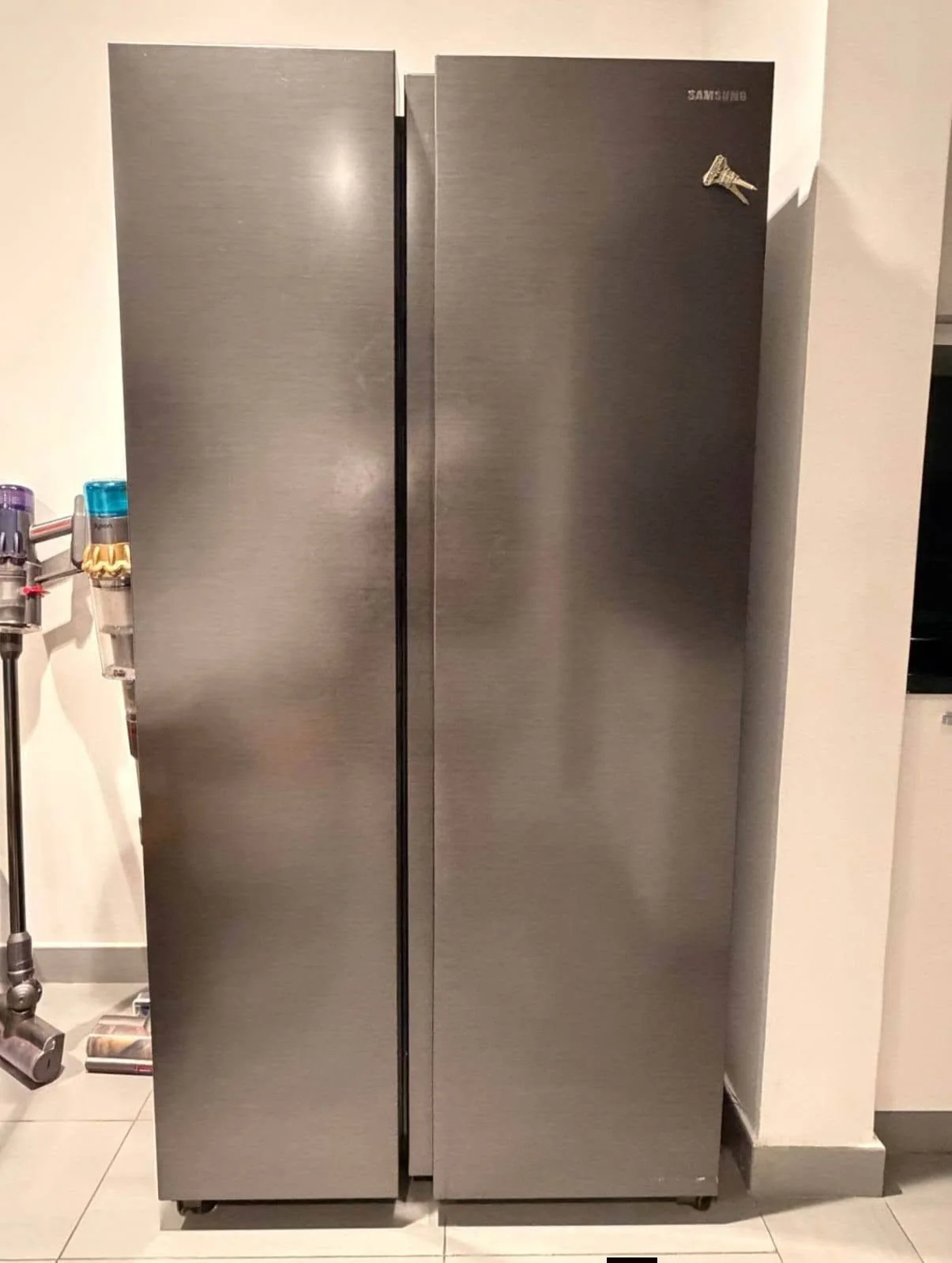
Spokane municipal regulations apply across all residential and commercial cooling appliances, such as top-mount freezer refrigerators, side-by-side units, French-door models, standalone chest freezers, under-counter beverage centers, and commercial reach-in walk-in coolers.
Where Are Spokane County Appliance Drop-Off Facilities Located?
Spokane County residents possessing appropriate hauling trailers can transport residential refrigeration units to three licensed regional solid waste disposal facilities:
North County Transfer Station
📍 22123 N. Elk-Chattaroy Rd, Colbert, WA 99005
🕒 Open Daily: 8:30 AM – 4:00 PM
Equipped with dedicated hazardous white-goods staging bays and automated scale systems. Accepts residential refrigerators, deep freezers, and dehumidifiers.
Spokane Valley Transfer Station
📍 3941 N. Sullivan Rd, Spokane Valley, WA 99216
🕒 Open Daily: 8:30 AM – 4:00 PM
High-volume transfer facility serving the Spokane Valley corridor, Millwood, and Liberty Lake. Dedicated metal sorting yard for end-of-life appliances.
Spokane Waste-to-Energy Facility
📍 2900 S. Geiger Blvd, Spokane, WA 99224
🕒 Open Daily: 7:30 AM – 5:00 PM
Central municipal facility processing municipal solid waste. Segregates white goods and large scrap metal before mass-burn energy generation.
Transport appliances in an upright vertical orientation whenever hauling cooling units in open pickup beds or utility trailers. Laying a refrigerator flat on its back or side causes pressurized compressor oil to migrate into the delicate evaporator tubes, complicating fluid reclamation and causing irreversible oil spills inside vehicle cargo beds.
How Much Does Refrigerator Disposal Cost in Spokane County?
Self-hauling a refrigerator to municipal transfer stations in Spokane County costs between $44.70 and $68.00 in total out-of-pocket gate charges. The regional disposal system calculates final pricing by combining baseline vehicle scale fees with mandatory item-specific refrigerant reclamation surcharges.
Spokane County Solid Waste facilities charge a $19.70 minimum scale fee covering up to 340 pounds of weight, followed by a per-ton pro-rated rate for heavier cargo. On top of the scale fee, county facilities assess a mandatory $25.00 to $40.00 Freon removal surcharge for every unit containing an unevacuated cooling compressor.
| Evaluation Parameter | DIY Self-Haul (Transfer Station) | Municipal Bulk Trash Tag | Spokane WA Junk Removal (Pro Crew) |
|---|---|---|---|
| Total Out-of-Pocket Cost | $44.70 – $68.00+ (plus vehicle fuel) | $45.00 – $65.00 (advance tag required) | Transparent Upfront Price Range |
| Refrigerant Recovery Surcharge | $25.00 – $40.00 per unit added at scale | Included in specialized bulk fee | 100% Included (Zero Hidden Surcharges) |
| Physical Labor Required | 100% Homeowner (250–320 lbs lifting) | Homeowner must haul unit to curb | Zero Homeowner Effort (Full 2-Man Crew) |
| Vehicle Requirements | Heavy-duty pickup truck or utility trailer | None (must sit on curbside pavement) | Specialized 16-Foot Enclosed Box Truck |
| Average Turnaround Time | 3 to 5 hours (loading, transit, scale queue) | 1 to 3 weeks waiting for scheduled cycle | Same-Day or Next-Day Arrival Window |
| Interior Damage Protection | High risk of doorway, drywall, floor scratches | High risk navigating through hallways | Floor Runners & Padded Glide Blankets |
| Landfill Diversion Rate | Subject to municipal scrap yard processing | Municipal solid waste transfer processing | 70%+ Material Diversion & Scrap Recycling |
Queue times at the North County Transfer Station in Colbert and the Spokane Valley Transfer Station on Sullivan Road regularly exceed 45 to 60 minutes on peak Saturday and Sunday mornings. When factoring in fuel costs, physical lifting strain, and vehicle wear, self-hauling an old cooling appliance delivers negligible financial savings compared to full-service extraction. For homeowners desiring rapid, injury-free disposal, our crew provides responsible appliance removal in Spokane backed by guaranteed upfront pricing.
How Do Professionals Remove Heavy Refrigerators Safely?
Extracting modern multi-door refrigerators requires rigid technical protocols to prevent structural drywall damage, hardwood flooring gouges, and personal spinal injuries. A standard side-by-side or French-door refrigerator weighs between 250 and 350 pounds empty, with older compressor housings concentrating mass at the bottom rear frame.
Professional junk removal specialists execute a standardized five-step removal sequence:
Disconnect Power & Secure Copper Plumbing Lines
Shut off the dedicated cold water shutoff valve behind the refrigerator cabinet. Disconnect the 1/4-inch braided stainless steel or flexible copper ice-maker supply line and cap the valve securely. Unplug the 120-volt grounded three-prong power cable and coil it safely against the chassis.
Remove Interior Components & Defrost 24 Hours
Extract tempered glass shelving, crisper bins, egg holders, and door shelving trays to eliminate shifting mass during transit. Ensure the freezer compartment has defrosted for at least 24 hours to prevent meltwater from spilling onto luxury vinyl plank or polished oak floors.
Secure Exterior Doors with High-Tensile Poly Straps
Fasten French doors, lower pull-out freezer drawers, and magnetic door seals with industrial stretch wrap or padded moving straps. Preventing accidental door swings protects kitchen island cabinetry, door jambs, and hallway drywall during tight turns.
Deploy Floor Glide Runners & Load Appliance Hand Truck
Lay down heavy-duty neoprene surface protection runners across sensitive hardwood, ceramic tile, and carpet thresholds. Tilt the refrigerator back onto an 800-pound rated pneumatic-tired appliance hand truck fitted with non-marking rubber wheels and staircase climbers.
Transport Upright & Deliver to Certified Reclamation Bay
Wheel the appliance out via ramps into our specialized enclosed box truck. Secure the unit against interior e-track cargo rails in an upright position with heavy-duty ratchet straps. Transport directly to an EPA-certified Inland Northwest scrap processor for certified recovery.
If your property cleanout involves multiple rooms or extensive garage reorganization, our teams also handle appliance pickup in Spokane Valley and full property cleanouts, including bulky furniture and household junk hauling.
Need Your Old Refrigerator Hauled Away Today?
Skip the truck rentals, heavy lifting, and Colbert transfer station lines. Our insured two-man crews handle 100% of the extraction, transport, and EPA refrigerant fees.
Can You Donate a Working Refrigerator in Spokane?
Donating a functional, pristine refrigerator provides meaningful assistance to local families while keeping reusable metals out of scrap recycling streams. However, Inland Northwest charitable organizations enforce rigorous intake protocols:
- Habitat for Humanity ReStore Spokane (1022 E. Clark Ave, Spokane, WA 99202): Accepts working refrigerators, freezers, and ranges manufactured within the last 10 years. Units must be plugged in and cooling to 38°F or below, with complete door gaskets and all interior shelves present.
- Spokane Valley Partners (10814 E. Broadway Ave, Spokane Valley, WA 99206): Coordinates with low-income households and emergency housing programs across Spokane Valley to place clean, reliable kitchen appliances.
- Union Gospel Mission Thrift Stores (Multiple locations across Spokane & Spokane Valley): Accepts tested residential appliances to fund transitional recovery programs, provided exterior enamel displays no heavy rust, dents, or mold.
Charitable organizations will immediately reject appliances exhibiting rust, mechanical motor whine, cracked interior liners, missing door handles, or cooling failures. Charities do not possess EPA Section 608 recovery licenses and cannot repair cooling loops. When charities decline your unit, contact our team to ensure compliant industrial recycling.
Environmental Impact & Spokane Landfill Diversion Mechanics
Recycling an old refrigerator diverts significant volumes of reusable industrial materials from regional landfills while preventing catastrophic greenhouse gas emissions. A standard domestic refrigerator contains approximately 150 pounds of recyclable carbon steel, 5 to 10 pounds of commercial-grade copper tubing, and up to 15 pounds of aluminum heat-exchange fins.
When processed by certified Inland Northwest scrap processors:
- Refrigerant Recovery: Sealed vacuum pumps draw pressurized R-134a or R-12 refrigerant gas out of the compressor lines into certified recovery cylinders. Recovered gases are transferred to reclamation facilities for chemical cleansing and repurposing.
- Compressor Oil Extraction: Mineral and polyolester oils are drained under vacuum to prevent hydrocarbon soil contamination. Extracted compressor lubricants undergo high-temperature industrial re-refining.
- Heavy Metal Shredding: Magnetic separators and eddy-current sorters extract ferrous steel and non-ferrous metals. Scrap metals are baled and shipped to Pacific Northwest electric-arc furnace mills for melt-down into structural rebar and building steel.
- Polyurethane Foam Degassing: Specialized shredder enclosures capture blowing agents contained within rigid polyurethane insulation foam, destroying residual ozone-depleting molecules.
Frequently Asked Questions About Spokane Refrigerator Disposal
Leaving a refrigerator on the curb without a pre-scheduled municipal bulk collection tag violates Spokane Municipal Code Chapter 10.08. City automated collection trucks cannot lift appliances, and unpermitted curbside dumping results in municipal code violation citations. Furthermore, Washington State law mandates that any refrigerator stored outdoors must have all doors removed or firmly latched to prevent childhood entrapment hazards.
Scrap metal yards in Spokane County will not pay cash for refrigerators unless the unit displays a certified EPA Section 608 evacuation sticker signed by a licensed technician. Processing unevacuated cooling units violates federal clean air regulations, subjecting scrap yards to severe statutory penalties.
Spokane County transfer stations charge an additional $25.00 to $40.00 surcharge because municipal staff must stage cooling units in dedicated containment bays and contract licensed technicians to evacuate hazardous fluorinated gases before scrap metal shredding.
Laying a refrigerator flat causes lubricating compressor oil to drain into the condenser tubing and cooling coils, increasing the risk of chemical leaks. If you must transport a unit horizontally, allow the refrigerator to stand upright for a minimum of 24 continuous hours before plugging it in, and secure the chassis with industrial ratchet straps to prevent structural frame twisting.
A standard residential side-by-side or French-door refrigerator weighs between 250 and 350 pounds empty, while older 1990s models can exceed 400 pounds. Safe removal requires two physically capable adults, an 800-pound rated appliance dolly, and commercial tie-down straps.
This guide references statutory environmental regulations and municipal solid waste guidelines enforced across Spokane County, Washington:
- United States Clean Air Act (Title VI, Section 608): National Recycling and Emission Reduction Program governing ozone-depleting substances and refrigerant evacuation standards (codified in 40 CFR Part 82, Subpart F).
- Spokane County Regional Solid Waste System (Spokane County Code Chapter 8.58): Operational regulations, fee structures, and white-goods handling protocols for the North County and Spokane Valley Transfer Stations.
- Washington Department of Ecology (WAC Chapter 173-443): Hydrofluorocarbons (HFCs) and Refrigerant Management Program establishing reporting thresholds and refrigerant leak prevention mandates.
- Spokane Regional Clean Air Agency (SRCAA Regulation I): Regional air pollution control ordinances governing the disposal and processing of stationary cooling appliances throughout Spokane County.